Introduction
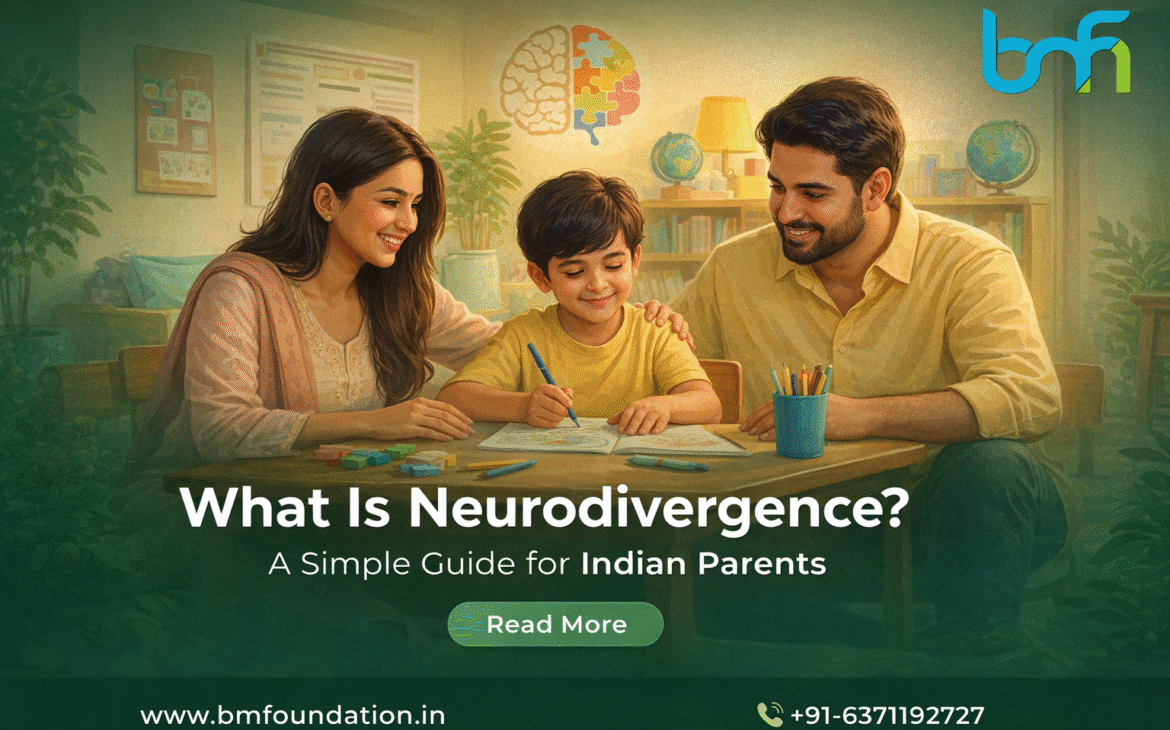
Parenting today requires navigating new information, evolving learning styles, and increasing awareness about how children think, behave, and grow. Across India, more families are encountering the word “neurodivergence” whether through school discussions, online research, or after noticing developmental differences in their child.
But what does neurodivergence truly mean? How is it connected to conditions like autism, ADHD, dyslexia, or dyspraxia? Most importantly, how can Indian parents interpret these terms without fear, stigma, or misconceptions?
This guide simplifies the meaning of neurodivergence, explains the most common conditions, and highlights why early understanding can transform a child’s developmental journey.
Neurodivergence vs. Neurotypical: A Simple Explanation
Neurodivergence refers to natural variations in the brain that affect learning, communication, attention, sensory processing, or behaviour. These differences are not defects or disorders they are simply variations in how individuals experience the world.
- Neurodivergent individuals include children with autism, ADHD, dyslexia, dyspraxia, and other neurological differences.
- Neurotypical individuals follow the commonly expected patterns of development, behaviour, and cognition.
A Shift in Perspective
The neurodiversity movement emphasises celebrating differences rather than viewing them as challenges to be “fixed.” This shift is particularly important in India, where misconceptions about developmental conditions still exist.
Understanding the Spectrum of Neurodivergent Conditions
Neurodivergence includes a range of unique cognitive and developmental profiles. Some of the most common among Indian children include:
Autism Spectrum Disorder (ASD)
Autism affects communication, sensory processing, and social interaction.
Common traits include:
- Delayed or atypical speech development
- Sensitivity to sounds, textures, or crowds
- Strong preference for routines
- Difficulty interpreting social cues
- Repetitive behaviours
Many autistic children excel in memory, visual thinking, patterns, maths, creativity, and problem-solving.
Attention Deficit Hyperactivity Disorder (ADHD)
ADHD influences attention, behaviour regulation, and energy levels.
Common signs include:
- Difficulty sustaining focus
- High energy or restlessness
- Impulsive decision-making
- Challenges completing tasks
Children with ADHD often demonstrate strong creativity, leadership qualities, and fast thinking.
Dyslexia
A language-based learning difference affecting reading and writing.
Signs include:
- Difficulty reading fluently
- Slow decoding of words
- Letter reversals
- Spelling challenges
- Trouble with written expression
With the right teaching approach, dyslexic children thrive academically and often excel in creativity and reasoning.
Dyspraxia (Developmental Coordination Disorder)
A coordination-related developmental difference.
It can affect:
- Handwriting
- Balance and motor skills
- Planning and organization
- Self-care tasks
With structured support, children with dyspraxia build confidence and independence.
Neurodivergence in India: What the Data Says
Recent studies indicate that developmental differences are more common than most families realize.
- Nearly 1 in 6 Indian children may experience developmental or behavioural challenges.
- Autism affects roughly 1–1.5% of children.
- ADHD may affect 5–8% of school-aged children.
- Dyslexia impacts an estimated 10–15% of students making it one of the most commonly underdiagnosed learning differences.
Despite this prevalence, awareness and acceptance remain limited, especially in semi-urban and rural areas. Many children do not receive early intervention simply because parents lack access to accurate information.
From the Medical Model to the Social Model of Neurodiversity
India is gradually transitioning from a traditional medical model to a more inclusive, strengths-based social model.
Medical Model
Focuses on diagnosing and treating “deficits.”
Social Model
Prioritises:
- Strengths
- Supportive environments
- Accessible education
- Sensory-friendly practices
- Individual needs
This perspective recognises that challenges often arise because systems are not designed for neurodivergent individuals not because the child is inadequate.
Why Language Matters: “Autistic Person” or “Person with Autism”?
Language shapes how children feel about themselves and how society perceives them.
Identity-first language: “Autistic child”
Often preferred by autistic adults as it recognises autism as an integral part of identity.
Person-first language: “Child with autism”
Commonly used in clinical and educational settings to emphasize individuality.
There is no universal rule parents should use the language that feels respectful and aligns with the child’s preference. What matters most is avoiding harmful labels such as “problem child,” “weak,” or “slow.”
Cultural Influences in India: Why Understanding Neurodivergence Is Sensitive
India’s cultural environment creates unique challenges for neurodivergent families.
Academic Pressure
A highly competitive school system often pushes children into comparison and labelling.
Stigma & Misunderstanding
Lack of awareness leads to misconceptions, delayed intervention, and emotional strain for families.
Influence of Extended Family
Relatives may unintentionally reinforce outdated beliefs or dismiss early signs.
Urban vs. Rural Divide
Access to developmental paediatrists, therapists, and special educators is still concentrated in major cities.
Rising Awareness
Urban India is witnessing a positive shift more screenings, inclusive schools, therapy centres, and parent support groups.
Recognizing Early Signs of Neurodivergence
Early identification helps children receive support before academic or emotional challenges intensify. Some indicators include:
- Speech delays or difficulty following instructions
- Hyperactivity or distractibility
- Sensory sensitivities (noise, textures, crowds)
- Difficulty reading, writing, or coordinating movements
- Emotional overwhelm or frequent meltdowns
- Social challenges or preference for routines
- Advanced abilities in specific interests
These signs do not confirm a diagnosis they simply suggest the need for a structured screening.
Conclusion
Neurodivergence is not a limitation, it is a different way of thinking, learning, and interacting with the world. When Indian parents embrace these differences with understanding and compassion, children gain the confidence to grow in their own unique ways.
By overcoming stigma and embracing supportive environments, we can build a future where every child, neurodivergent or neurotypical thrives.