Raising a neurodivergent child is never meant to be a journey carried by one parent alone. Yet many families silently shoulder the emotional weight of navigating Autism, ADHD, sensory differences, communication challenges, school concerns, emotional regulation, and social expectations without enough support.
Parents often feel they must become everything at once:
teacher, therapist, advocate, emotional anchor, researcher, and protector.
But children thrive best when support extends beyond the home. It truly takes a village and for neurodivergent children, it also takes understanding the whole body — emotions, sensory systems, movement, communication, environment, relationships, and nervous system regulation all working together.
Supporting neurodivergent children is not about “correcting behaviour.”
It is about building connected environments where children feel safe, understood, and empowered to grow.
Understanding the Whole Child Means Understanding the Whole Body
Many neurodivergent children experience the world differently on a sensory, emotional, physical, and neurological level. What may appear as “difficult behaviour” is often the body responding to overwhelm, stress, anxiety, or sensory overload. child who avoids crowded spaces may not be antisocial. A child who constantly moves may be trying to regulate focus and emotions. A child who struggles during transitions may feel unsafe with unpredictability.
The nervous system plays a powerful role in how children learn, communicate, process emotions, and respond to their environment. When adults begin understanding the connection between the brain, body, emotions, and sensory experiences, support becomes more compassionate and effective.
Instead of asking:
“How do we stop this behavior?”
The question becomes:
“What does this child need to feel regulated, supported, and safe?”
That shift changes everything.
Why Community Support Matters for Neurodivergent Families
Parents cannot—and should not—carry every responsibility alone. Neurodivergent children grow best when families, educators, therapists, caregivers, and communities work together to create consistent emotional support.
When children feel understood across different environments, they experience:
- Greater emotional safety
- Stronger confidence and self-esteem
Community support also reduces stress and burnout for parents, who often feel isolated while navigating developmental concerns and daily challenges. A supportive community helps families feel seen, validated, and empowered instead of overwhelmed. This is why inclusive schools, informed educators, parent support networks, therapists, and neurodivergent-friendly spaces are so important for long-term child development.
Emotional Regulation Starts With Connection
Children cannot regulate emotions when they constantly feel misunderstood.
Many neurodivergent children experience heightened sensitivity to:
- Noise
- Bright lights
- Unexpected changes
- Social pressure
- Emotional tension
- Physical discomfort
When adults respond with punishment, criticism, or shame, the child’s nervous system often becomes even more overwhelmed. But connection changes the outcome.
Simple moments of emotional safety can have a profound impact:
- A teacher offering patience instead of pressure
- A parent validating emotions instead of dismissing them
Children learn regulation through relationships. They feel calmer when adults around them remain calm, supportive, predictable, and emotionally safe.
Building a Village Around Neurodivergent Children
Creating a supportive ecosystem does not require perfection. It requires collaboration, awareness, and empathy.
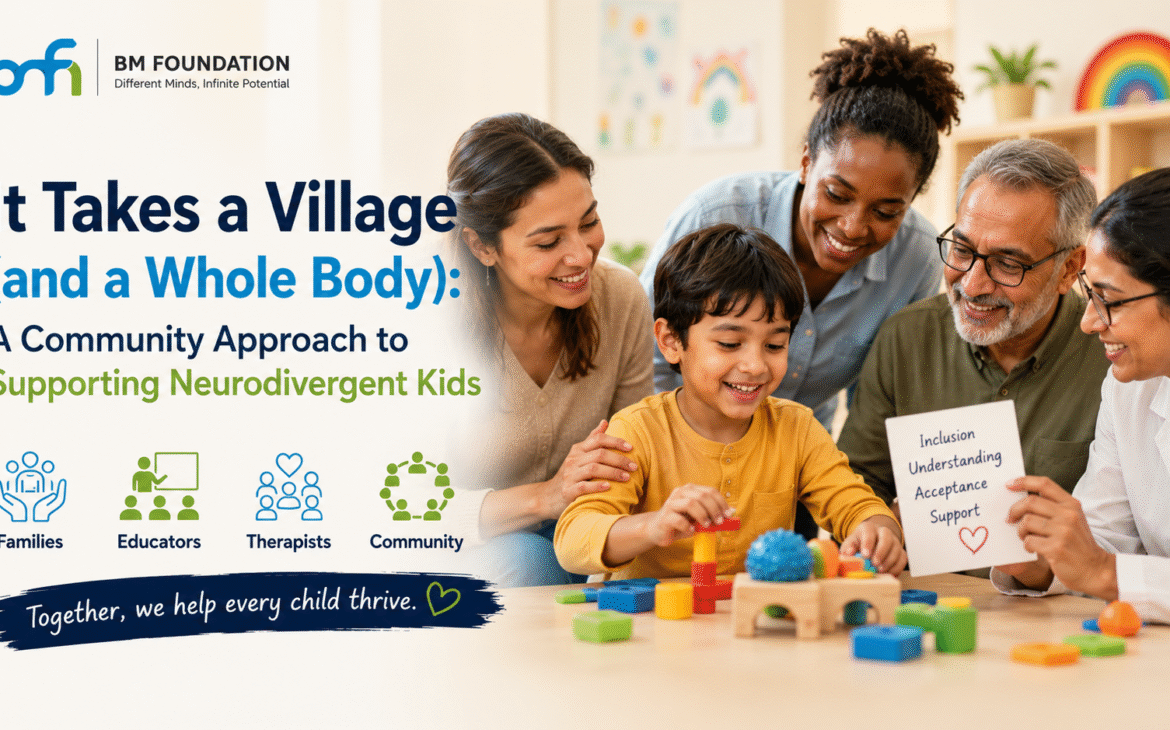
Families
Parents and caregivers provide the emotional foundation children rely on daily. Consistent routines, emotional validation, and strength-based parenting help children feel secure and accepted.
Schools and Educators
Inclusive classrooms play a major role in helping neurodivergent children develop confidence and social belonging. Educators who understand sensory needs and communication differences can dramatically improve learning experiences.
Therapists and Specialists
Professionals who use neurodivergent-affirming approaches help children build communication skills, emotional regulation, sensory understanding, and independence without trying to change who they are.
Communities
Communities become powerful when they create spaces where children and families feel welcomed instead of judged. Awareness and inclusion help reduce stigma and create opportunities for meaningful connection.
Strength-Based Support Creates Long-Term Growth
Too often, conversations around neurodivergence focus only on deficits. But neurodivergent children also bring extraordinary strengths to the world.
Many children demonstrate:
- Creativity and innovation
- Deep curiosity and emotional insight
Some children excel in pattern recognition, storytelling, problem-solving, visual thinking, music, empathy, or unique forms of communication. When support systems focus on strengths alongside challenges, children develop healthier self-esteem and a stronger sense of identity. The goal should never be to make children appear “normal.” The goal is to help them thrive as themselves.
Why Early Collaborative Support Matters
Early support can significantly improve emotional well-being, communication, learning, and confidence. But the most effective support happens when everyone works together.
Children benefit when:
- Parents and educators communicate consistently
- Emotional needs are understood across environments
Collaborative care creates stability, predictability, and emotional safety — all of which are essential for neurodivergent development. Families who receive compassionate guidance early often experience stronger relationships, lower stress, and more positive long-term outcomes.
Creating Inclusive Futures Together
The future of neurodivergent support is not built on isolation. It is built on community. It is built on understanding that children are more than behaviours, diagnoses, or labels. Every child deserves environments where they feel safe enough to learn, communicate, grow, and belong. Every parent deserves support without judgment and every community has the power to become part of the village that helps neurodivergent children thrive. When families, schools, therapists, and communities come together with empathy and understanding, children do more than cope. They flourish.
Support for Neurodivergent Families in India
Families searching for neurodivergent parenting support, Autism and ADHD guidance, inclusive education strategies, emotional regulation support, and child development programs are increasingly seeking holistic approaches that support both the child and the family. At BM Foundation and Briio Kids, the focus remains on creating compassionate, neurodivergent-affirming environments where children feel understood, supported, and empowered to grow with confidence. Because every child deserves a village that believes in their potential.
Frequently Asked Questions
What does a community approach mean for neurodivergent children?
A community approach means families, schools, therapists, caregivers, and communities work together to support a child’s emotional, sensory, educational, and developmental needs consistently.
Why is emotional regulation important for neurodivergent children?
Emotional regulation helps children manage stress, sensory overwhelm, communication challenges, and social situations more effectively while improving confidence and overall well-being.
How can schools better support neurodivergent students?
Schools can support neurodivergent students through inclusive classrooms, sensory-friendly strategies, emotional support, flexible learning methods, and educator awareness.
Why is strength-based support important?
Strength-based support helps children build confidence, self-esteem, motivation, and emotional resilience by focusing on their abilities, interests, and unique ways of thinking.