
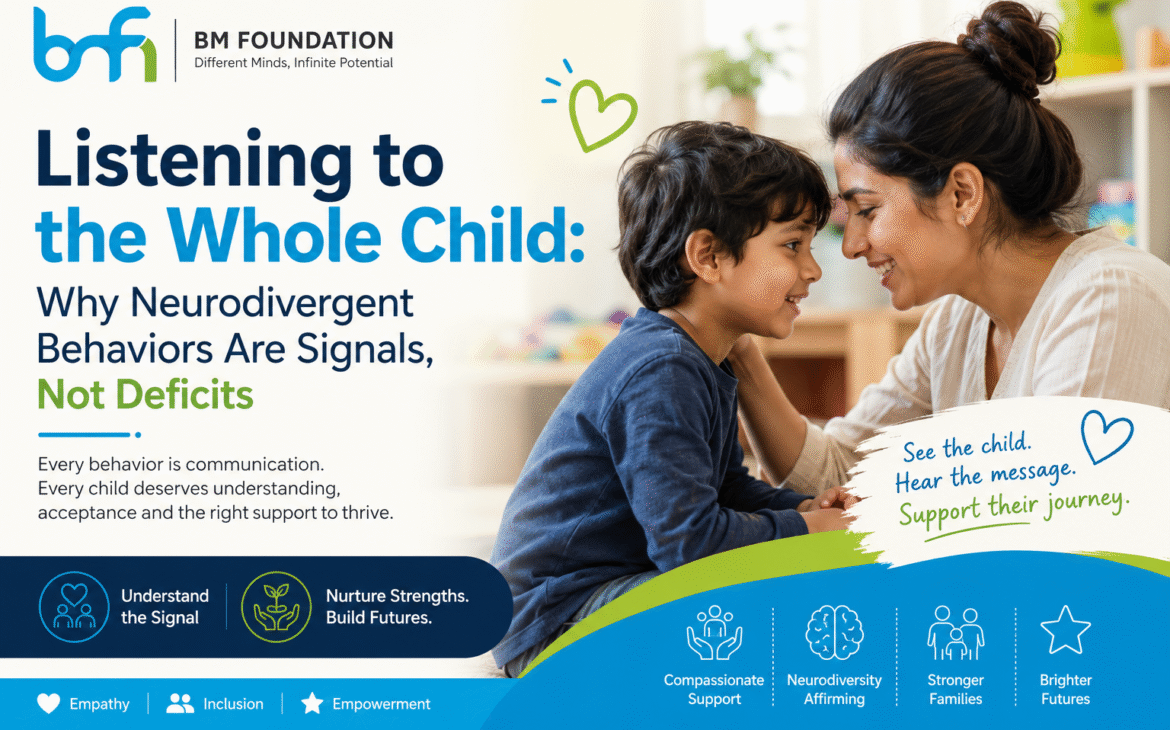
When a child avoids eye contact, struggles to sit still, repeats questions, becomes overwhelmed in noisy environments, or experiences emotional meltdowns, society often labels these Behaviours as “problems.”
But what if these Behaviours are not deficits at all?
What if they are signals?
For many neurodivergent children, Behaviours are forms of communication. They reveal unmet needs, sensory overwhelm, emotional stress, difficulty processing information, or even deep curiosity about the world around them.
Understanding this shift can completely transform how parents, teachers, and caregivers support children with Autism, ADHD, Dyslexia, Sensory Processing Differences, and other neurodivergent experiences. The goal should never be to “fix” the child. The goal is to understand what the child is trying to communicate.
Why Traditional Approaches Often Fail Neurodivergent Children
For decades, many educational and behavioural systems focused heavily on correcting Behaviours rather than understanding their cause. Children were expected to learn, behave, communicate, and socialize in one standardized way. Unfortunately, this approach often overlooks how differently neurodivergent brains process emotions, movement, communication, and sensory input.
A child who appears “disruptive” may actually be overwhelmed.
A child who seems “uninterested” may simply be processing information differently.
A child who struggles socially may deeply want connection but lack the tools to express it comfortably.
When adults focus only on visible behaviour without understanding the underlying reason, children can begin to internalize shame, anxiety, frustration, and low self-esteem.
Neurodivergent Behaviours Are Often Stress Responses
Many Behaviours associated with Autism and ADHD are adaptive responses rather than intentional disobedience. For example, emotional meltdowns may signal sensory overload or communication frustration. Constant movement may help a child regulate focus and emotions. Repetitive Behaviours can provide comfort, predictability, and emotional regulation during stressful situations.
Difficulty with transitions may reflect anxiety around unpredictability, while avoiding eye contact can sometimes reduce sensory stress and improve concentration. When parents begin viewing Behaviours through a compassionate lens, everything changes.
Instead of asking:
“How do I stop this behavior?”
The question becomes:
“What is my child trying to tell me?”
This shift creates stronger emotional safety, healthier communication, and better long-term development.
The Emotional Impact of Feeling Misunderstood
Many neurodivergent children spend years hearing phrases like:
- “Behave properly.”
- “Why can’t you just focus?”
Over time, repeated misunderstanding can affect confidence, emotional regulation, and identity formation. Children thrive when they feel seen, heard, understood, and accepted for who they are. That is why compassionate parenting and neurodivergent-informed support are so important during early childhood development. Research consistently shows that emotionally safe environments improve learning, communication, emotional resilience, and self-confidence in neurodivergent children.
Listening to the Whole Child Changes Everything
When families begin listening beyond surface Behaviours, they often discover incredible strengths hidden underneath the struggle. Neurodivergent children may be deeply creative, highly observant, emotionally intuitive, innovative, and exceptionally curious about the world around them. Many children also demonstrate strong pattern recognition, problem-solving abilities, and unique ways of thinking when supported in the right environment.
The key is building support systems that nurture both emotional well-being and developmental growth. This is why many families today are exploring neurodivergent parenting support programs that focus on understanding rather than punishment.
How Parents Can Better Support Neurodivergent Children
Create Predictable Routines
Predictability helps reduce anxiety and emotional overwhelm. Visual schedules, transition warnings, and consistent routines can help children feel safe and prepared.
Validate Emotions Before Correcting Behaviour
Instead of immediately correcting a reaction, acknowledge the child’s experience first.
For example:
“I can see that this feels overwhelming for you.” Validation builds trust and emotional connection.
Focus on Strength-Based Development
Children develop confidence when adults recognize what they do well instead of constantly highlighting challenges. Celebrate progress, creativity, effort, and individuality.
Collaborate With Neurodivergent-Informed Professionals
Working with specialists who understand Autism, ADHD, sensory needs, and child development can provide practical strategies tailored to your child’s unique profile.
Many parents today are seeking personalized neurodivergent parenting guidance in India to better support emotional regulation, communication, learning, and independence.
Why Early Support Matters
Early understanding can significantly improve developmental outcomes. When children receive support in emotionally safe environments, they are more likely to build confidence, improve communication skills, strengthen emotional regulation, and develop greater independence.
Early intervention does not mean changing who a child is. It means helping them navigate the world with greater support, self-awareness, and emotional safety. Families who access the right guidance early often experience reduced stress, stronger parent-child relationships, and improved overall well-being.
Creating a Future Where Neurodivergent Children Thrive
The conversation around neurodiversity is changing. Parents, educators, therapists, and communities are beginning to recognize that children do not need to fit into one rigid definition of success. Every child deserves to feel understood. Every child deserves support that respects their individuality.
And every child deserves environments that recognize Behaviours as communication rather than failure. Listening to the whole child is not simply a parenting strategy. It is a lifelong foundation for confidence, emotional health, learning, and growth.
Support for Neurodivergent Families in India
Families searching for compassionate neurodivergent parenting support, Autism and ADHD guidance, inclusive learning strategies, and child development programs are increasingly seeking personalized approaches that focus on the child as a whole person.
At BM Foundation and the focus remains on helping children grow with dignity, emotional safety, confidence, and individualized support tailored to their unique strengths and developmental needs. Because when children feel understood, they begin to thrive.
Frequently Asked Questions
What does neurodivergent mean?
Neurodivergent refers to individuals whose brains process, learn, or experience the world differently from typical developmental patterns. This can include Autism, ADHD, Dyslexia, Sensory Processing Differences, and other neurological variations.
Why are neurodivergent Behaviours misunderstood?
Many Behaviours are interpreted without understanding sensory needs, emotional regulation challenges, communication differences, or anxiety triggers. Viewing Behaviours as signals helps create more supportive responses.
How can parents better support neurodivergent children?
Parents can support children by building predictable routines, validating emotions, focusing on strengths, and seeking guidance from neurodivergent-informed professionals and support programs.
Why is early intervention important for neurodivergent children?
Early support can improve communication, emotional regulation, confidence, learning, and long-term developmental outcomes while reducing family stress and emotional overwhelm.