(An Initiative by The Better Matter Foundation)
Introduction
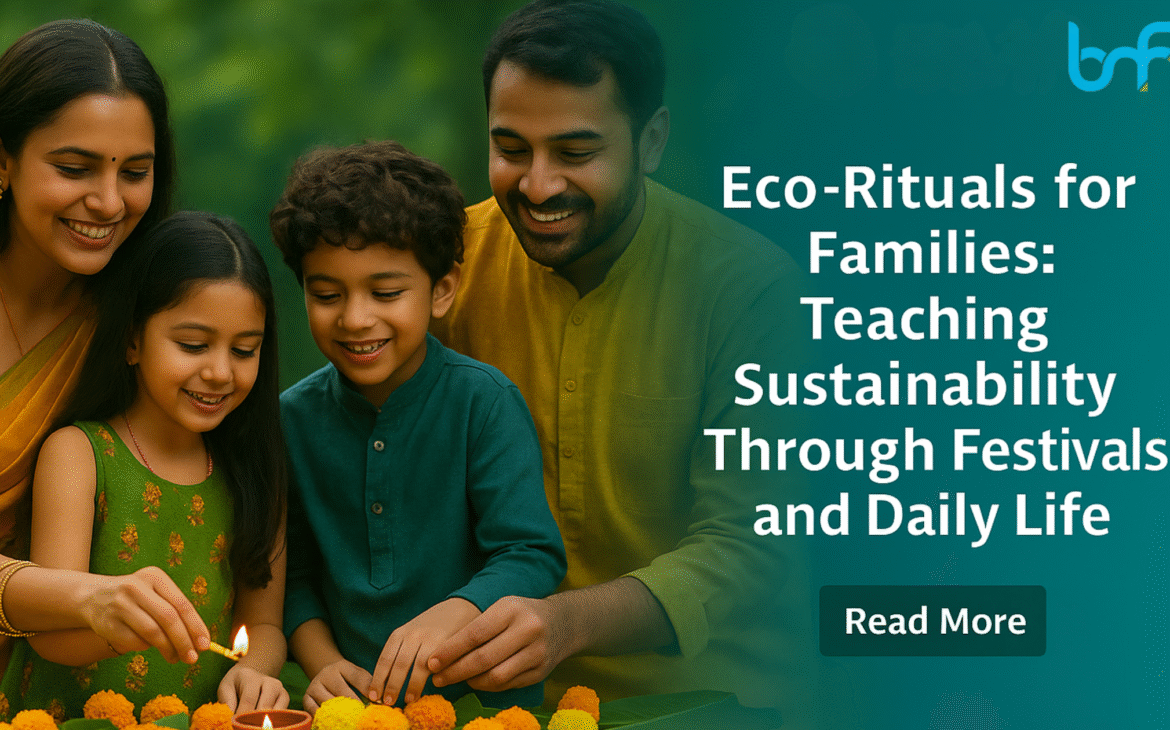
In India, festivals are more than celebrations, they are rituals of belonging. From Diwali lights to Holi colors, these traditions connect generations, foster joy, and weave communities together. But in recent years, the way we celebrate has changed. Plastic decorations have replaced handmade crafts, chemical colors have replaced natural dyes, and waste has quietly replaced wonder.
At The Better Matter Foundation (BMF), we believe that every festival and every day offers a chance to reconnect with the Earth and to transform joy into responsibility and tradition into sustainability.
Our philosophy of eco-rituals encourages families to make small, conscious choices in their homes and communities, nurturing both human bonds and environmental balance. By teaching sustainability through festivals and daily habits, we plant the seeds of eco-conscious living early, turning learning into a family ritual.
The Concept of Eco-Rituals: Blending Culture with Consciousness
An eco-ritual is a simple, repeatable act that celebrates nature as a part of everyday life. It could be as small as lighting an earthen lamp instead of an electric one, composting kitchen waste, or planting a sapling on a birthday instead of bursting crackers.
Eco-rituals transform sustainability from a rule into a relationship. They allow families to express care for the planet in joyful, cultural, and meaningful ways.
At BMF, we see eco-rituals as a bridge, connecting traditional wisdom with modern environmental responsibility. It’s about reviving the values our ancestors lived by, but in a language our children can understand.
Why Families Are the Best Teachers of Sustainability
Sustainability begins not in classrooms, but at home. When children see their parents separating waste, conserving water, or reusing materials, they internalize these actions as normal.
Parents are the first environmental educators.
Children mirror what they observe. When eco-friendly choices are made joyfully and consistently, not as punishments but as traditions, they become lifelong values.
At BMF, through our community education initiatives and environment programs like Green Spaces, we encourage parents to turn family traditions into acts of environmental stewardship.
“Children don’t inherit the Earth from us; they inherit our habits about it.”
How Festivals Can Become Environmental Classrooms
Festivals offer some of the richest opportunities to teach sustainability because they’re already filled with emotion, community, and meaning. By gently reimagining how we celebrate, we can restore the eco-spirit that lies at the heart of Indian culture.
Here’s how families can turn festivals into eco-learning experiences:
1. Diwali: From Smoke to Light
Instead of bursting firecrackers that harm air quality and disturb animals, families can celebrate Diwali as a festival of illumination, both inner and outer.
Eco-ritual ideas:
- Light earthen diyas filled with organic oil.
- Decorate homes with upcycled crafts and natural flowers instead of plastic lights.
- Donate old clothes or food to those in need, making the festival about giving, not consuming.
- Host a family “Light of Kindness” evening where every family member shares one sustainable habit they’ve practiced.
Lesson for children: True celebration is about spreading light, not smoke.
2. Holi: Bringing Back the Colors of Nature
Holi, the festival of colors, can easily become an eco-ritual by returning to natural dyes.
Eco-ritual ideas:
- Make homemade colors using turmeric, beetroot, spinach, and flowers.
- Avoid chemical-based powders that cause skin and water pollution.
- Recycle old buckets or use biodegradable materials for play.
- After Holi, host a family garden cleanup or tree-planting session to honor the Earth.
Lesson for children: Nature gives us colors, and it’s our job to protect her palette.
3. Ganesh Chaturthi: Returning to the Clay of Creation
The symbolism of Lord Ganesha returning to the earth after the festival beautifully aligns with eco-conscious values if celebrated mindfully.
Eco-ritual ideas:
- Choose clay or plant-based idols instead of Plaster of Paris.
- Use natural paints instead of chemical coatings.
- Conduct a home immersion in a small tub instead of polluting rivers.
- Turn leftover flowers into compost for your home plants.
Lesson for children: The Earth gives us form, and we must return to her with respect.
4. Raksha Bandhan: Bonds Beyond Humans
Raksha Bandhan is about protection , and who protects us more faithfully than nature herself?
Eco-ritual ideas:
- Create “Green Rakhis” from jute, seeds, or cloth scraps.
- Encourage children to tie a rakhi around a tree or plant as a symbol of gratitude.
- Replace synthetic gift packaging with reusable materials.
Lesson for children: True protection means protecting the planet too.
5. Makar Sankranti or Pongal: Gratitude for Harvest and Harmony
These harvest festivals celebrate the relationship between people, food, and nature, making them the perfect foundation for family sustainability lessons.
Eco-ritual ideas:
- Serve organic, locally sourced food.
- Feed birds or donate grains to the community.
- Use natural decorations: sugarcane, banana leaves, and turmeric roots.
- Start a small home garden with your children to grow herbs or vegetables.
Lesson for children: Food is not just fuel; it’s a blessing from the Earth.
Eco-Rituals Beyond Festivals: Everyday Sustainability for Families
Festivals may come once a year, but sustainability must live in everyday rituals. Families can embed eco-awareness into their daily lives with small yet powerful practices.
🌱 Morning Routine
Start each day with an eco-promise. It could be watering a plant, reducing water use, or walking to school instead of driving.
🍴 Mealtime
Compost kitchen waste. Use reusable steel or glass containers. Discuss where your food comes from and how choices affect farmers and ecosystems.
💧 Water Awareness
Teach children to measure water waste through small games or family challenges. Keep a “Water Jar” for the week to visualize conservation success.
♻️ Weekend Activities
Replace mall visits with eco-outings, nature walks, community clean-ups, or tree planting. These activities strengthen family bonds while nurturing stewardship.
🌍 Storytelling Time
Share folktales and stories that celebrate nature, from Panchatantra to tribal legends. Stories create emotional connections that last longer than facts.
Through such daily rituals, children don’t just learn sustainability they live it.
The BMF Perspective: Education Through Living, Not Lecturing
At The Better Matter Foundation, we view sustainability as a way of life, not a subject in a textbook. Our programs, like Green Spaces and Education for Impact, are designed to integrate environmental awareness into education and family life.
By encouraging eco-rituals, we aim to:
- Reconnect children with nature through emotional experiences.
- Involve parents as role models in sustainability education.
- Preserve cultural heritage while promoting modern ecological awareness.
- Inspire communities to adopt green practices during festivals and public events.
This model of eco-literacy through empathy ensures that environmental education is accessible, joyful, and deeply rooted in culture.
Why Eco-Rituals Matter Now More Than Ever
Climate change, pollution, and overconsumption threaten not just our planet, but our sense of connection to it. If the next generation is to inherit a livable Earth, sustainability must be taught not as a crisis — but as a culture.
Eco-rituals are that culture. They transform sustainability from fear to celebration, from responsibility to reverence.
By reintroducing conscious living into our festivals and family routines, we remind ourselves and our children that the Earth is not an object; it is a relative, a companion, and a home.
Conclusion
The path to sustainability does not begin in laboratories or policies; it begins in living rooms, courtyards, and hearts.
By adopting eco-rituals, families can reclaim the joy of living in harmony with nature while passing down values of gratitude, simplicity, and care.
At The Better Matter Foundation, we envision a world where every festival becomes a prayer for the planet, every home a school of empathy, and every child a guardian of Earth.
Because when learning and living merge, sustainability becomes not just a choice but a way of being.